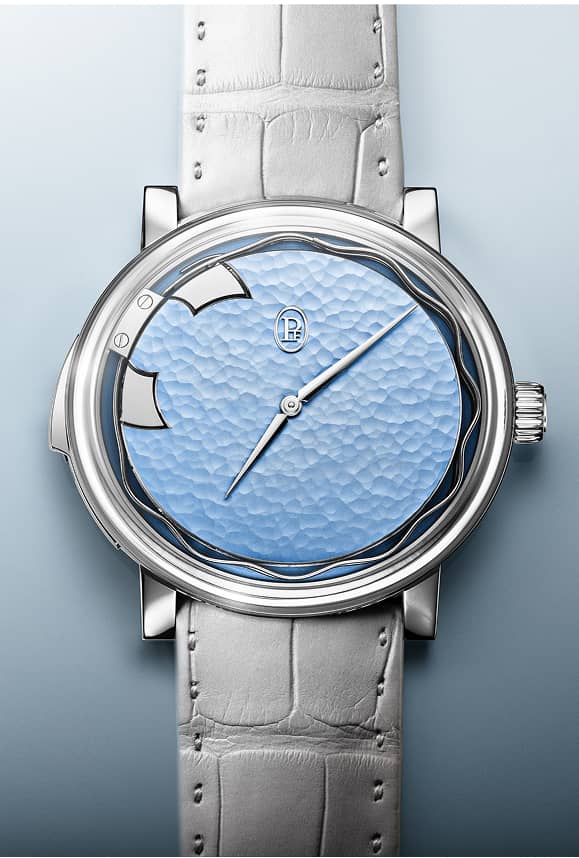
WHAT CAN A MECHANICAL OBJECT CREATED THREE CENTURIES AGO TEACH US ABOUT THE FUTURE OF WATCHMAKING?
For Parmigiani Fleurier, the answer begins with restoration.
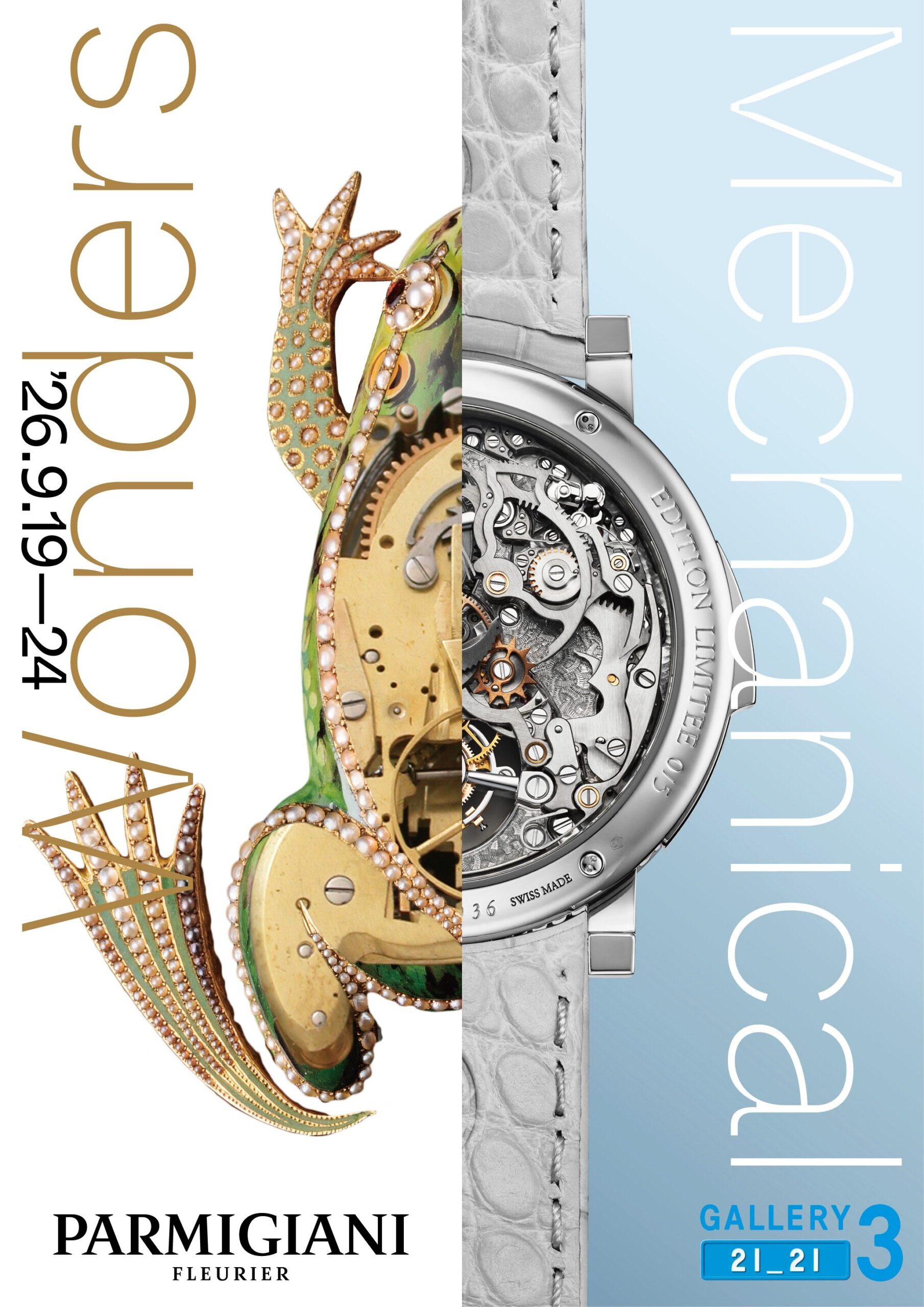
To mark its 30th anniversary, the Maison presents Mechanical Wonders, bringing together for the first time in Japan a rare selection of historical masterpieces from the Maurice Sandoz Collection, preserved by the Fondation Édouard et Maurice Sandoz, alongside contemporary creations by Parmigiani Fleurier.
Pocket watches, automata, chiming mechanisms and contemporary timepieces meet not as objects from separate eras, but as expressions of a continuing mechanical culture.
The exhibition invites us to look beyond chronology: to consider what knowledge survives within a mechanism, how it can be preserved and transmitted, and how it may become the beginning of something new.
Mechanical Wonders
21_21 DESIGN SIGHT, Tokyo
19–24 September 2026
BEFORE CREATION COMES UNDERSTANDING
Long before Parmigiani Fleurier existed, Michel Parmigiani had already developed the discipline that would shape the Maison: high horological restoration.
Restoring an important historical timepiece is not simply a matter of making it function again. It requires entering into the logic of another watchmaker, reading an architecture, understanding the purpose of each component, identifying techniques that may have disappeared and preserving the integrity of the original creation.
The object must first be understood.
Before founding Parmigiani Fleurier in 1996, Michel Parmigiani established himself as one of the foremost specialists in the field, restoring exceptional clocks, watches and mechanical objects while also creating complicated timepieces of his own. From this practice emerged a philosophy based on understanding before intervention, preservation before transformation and transmission without compromising authenticity.
This remains fundamental to Parmigiani Fleurier today.
Restoration, creation and innovation are not separate disciplines, but different expressions of the same intellectual approach. The knowledge acquired through studying historical masterpieces continues to inform new movements, original complications and a contemporary aesthetic defined by restraint and purity.
The past is therefore not a repertoire of forms to reproduce.
It is a body of knowledge to understand.
A LIVING MECHANICAL CULTURE
The historical objects presented in Mechanical Wonders belong largely to an extraordinary period in the early nineteenth century, when watchmakers, goldsmiths, enamellers and mechanical inventors pushed portable mechanics far beyond the measurement of time.
Their creations could sing, move, strike or imitate living creatures. They remind us that mechanical art has never been defined by utility alone. It has always contained imagination.
AUTOMATON FROG
EARLY 19TH CENTURY
Beneath its enamelled gold body, a sophisticated arrangement of cams, wheels and hammers produces sound and movement, transforming an inanimate object into an astonishing imitation of life.
More than a precious curiosity, it expresses an enduring ambition of mechanical art: to turn technical intelligence into emotion. The original object combines an articulated mechanism with a sequence that produces the frog’s croak and movement.
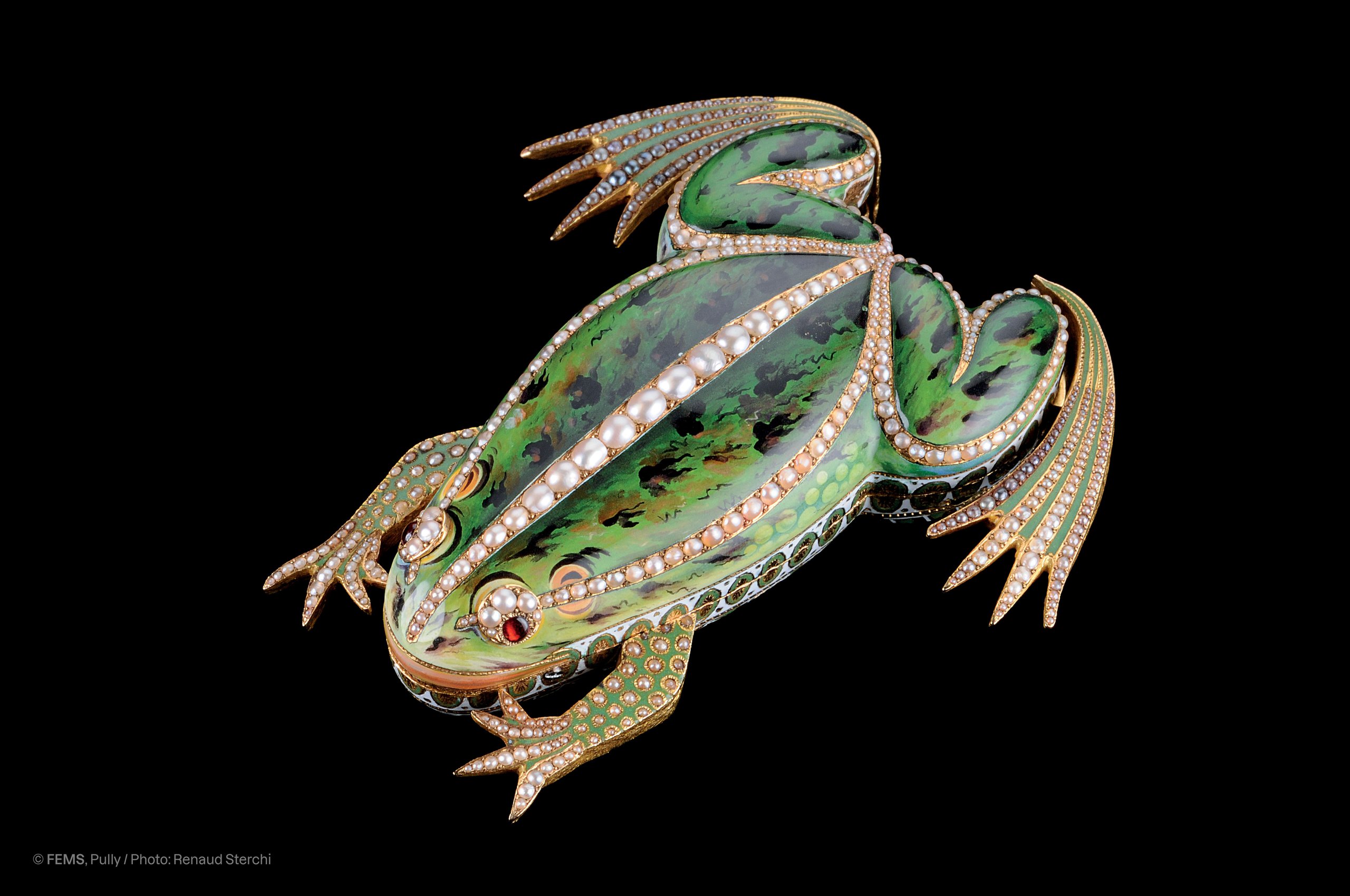
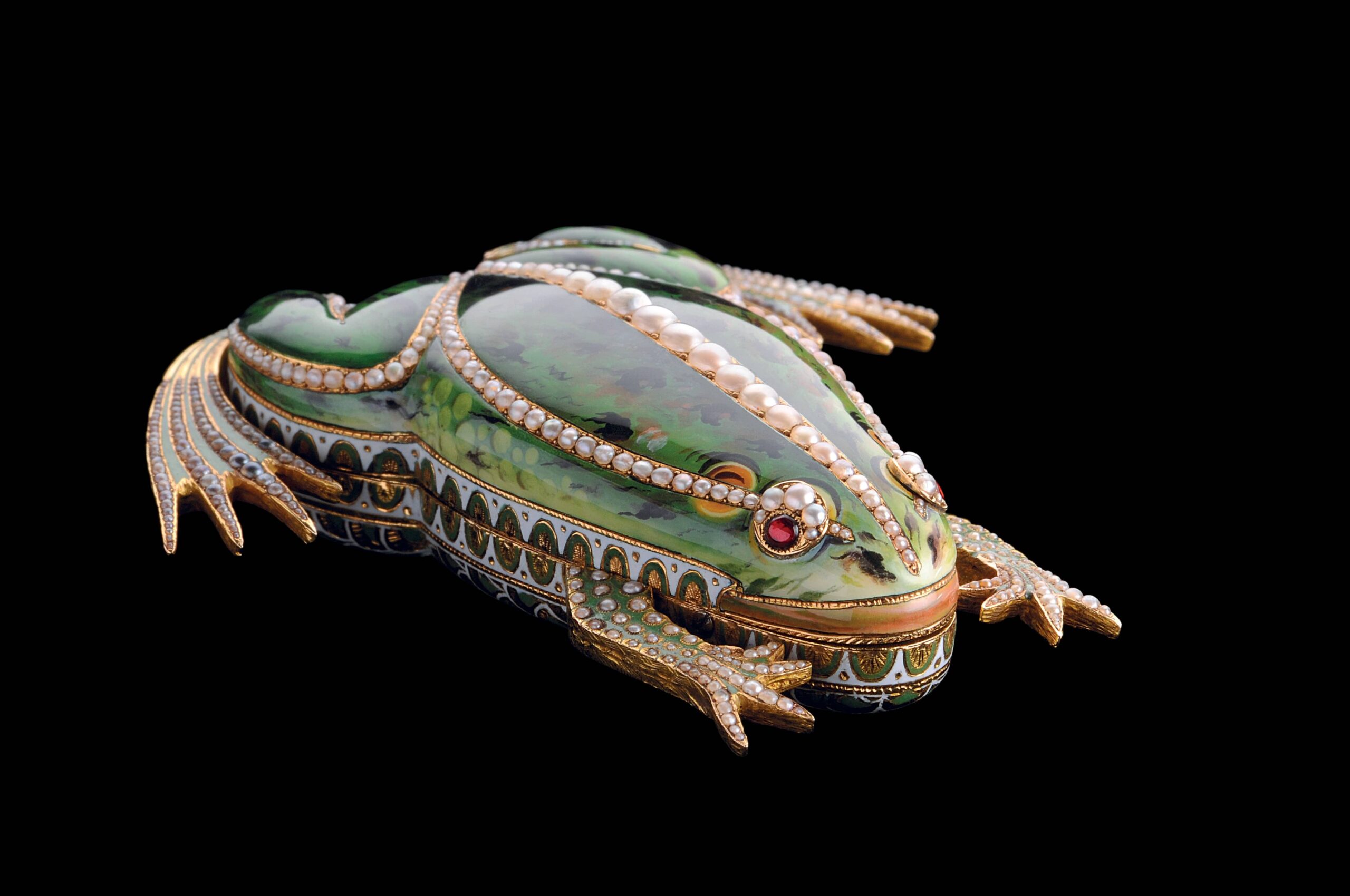
Automaton Frog, early 19th century
© FEMS, Pully – photo Renaud Sterchi
PERFUME FLASK WITH WATCH, AUTOMATA AND CARILLON
EARLY 19TH CENTURY
A watch, musical mechanism, carillon and animated scene coexist within a single richly decorated object. Five hammers strike five bells while the music drives miniature animations.
Timekeeping, sound, animation and decorative arts become one experience, a remarkable demonstration of complexity disappearing into coherence.
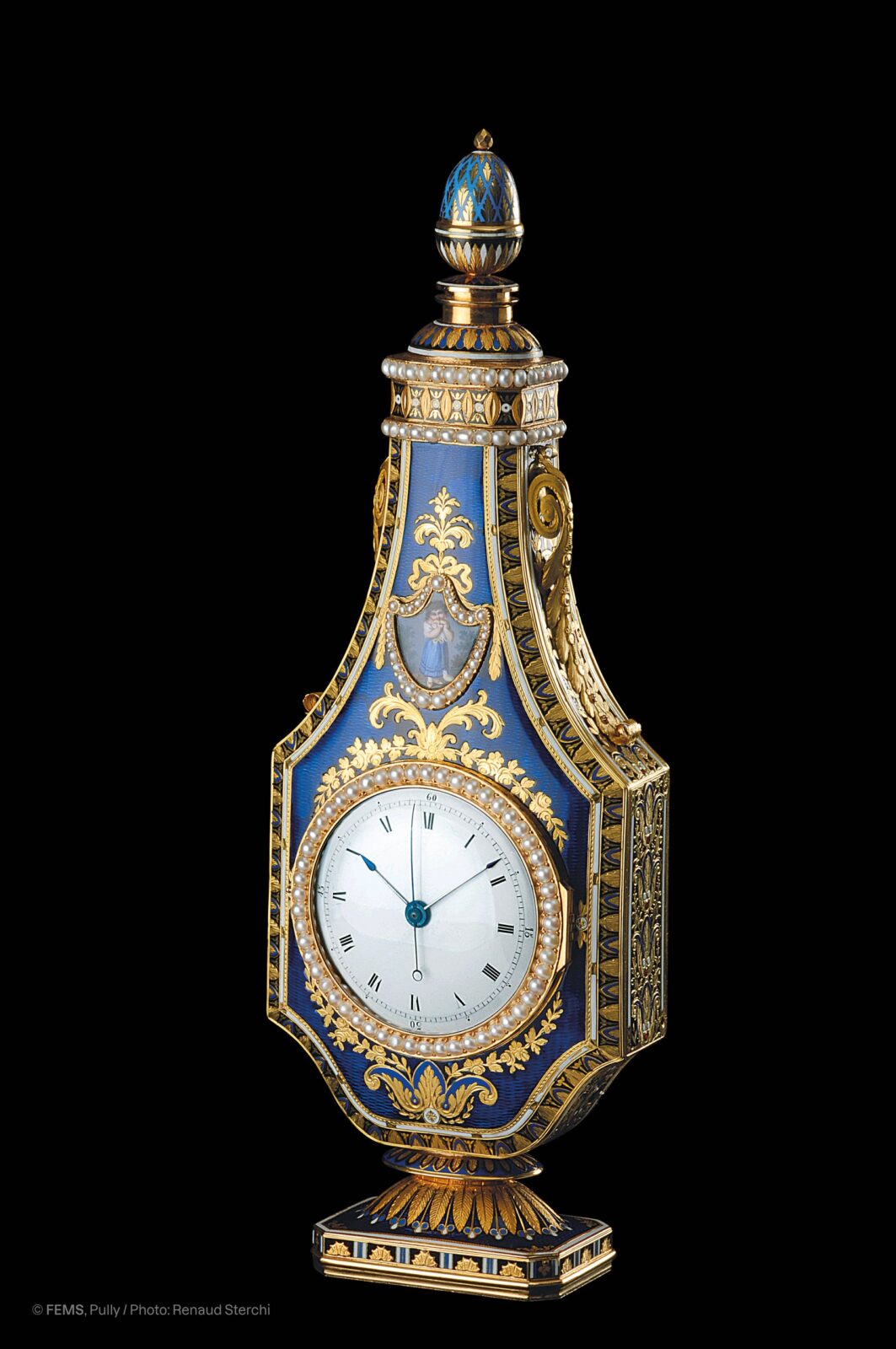
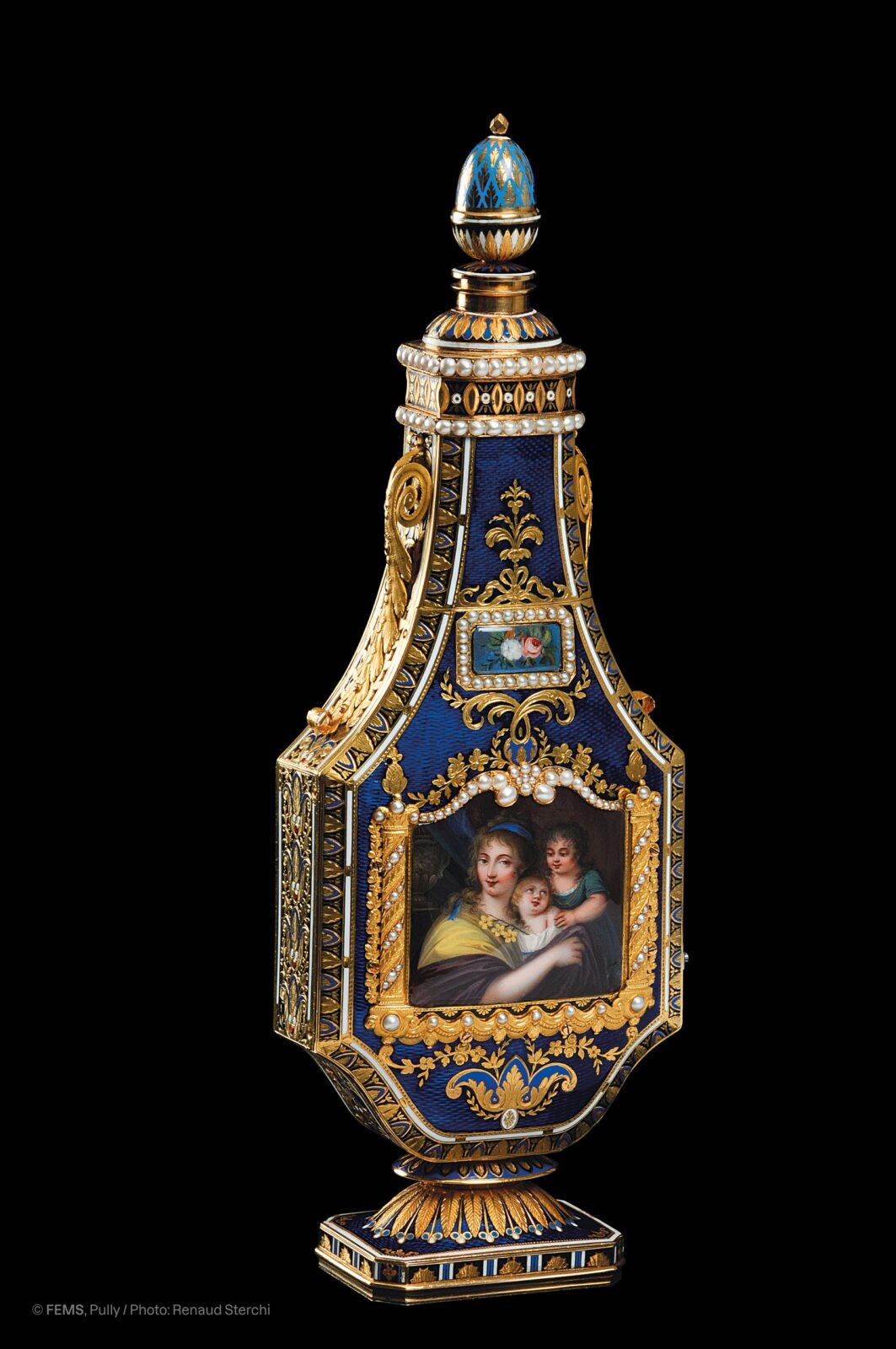
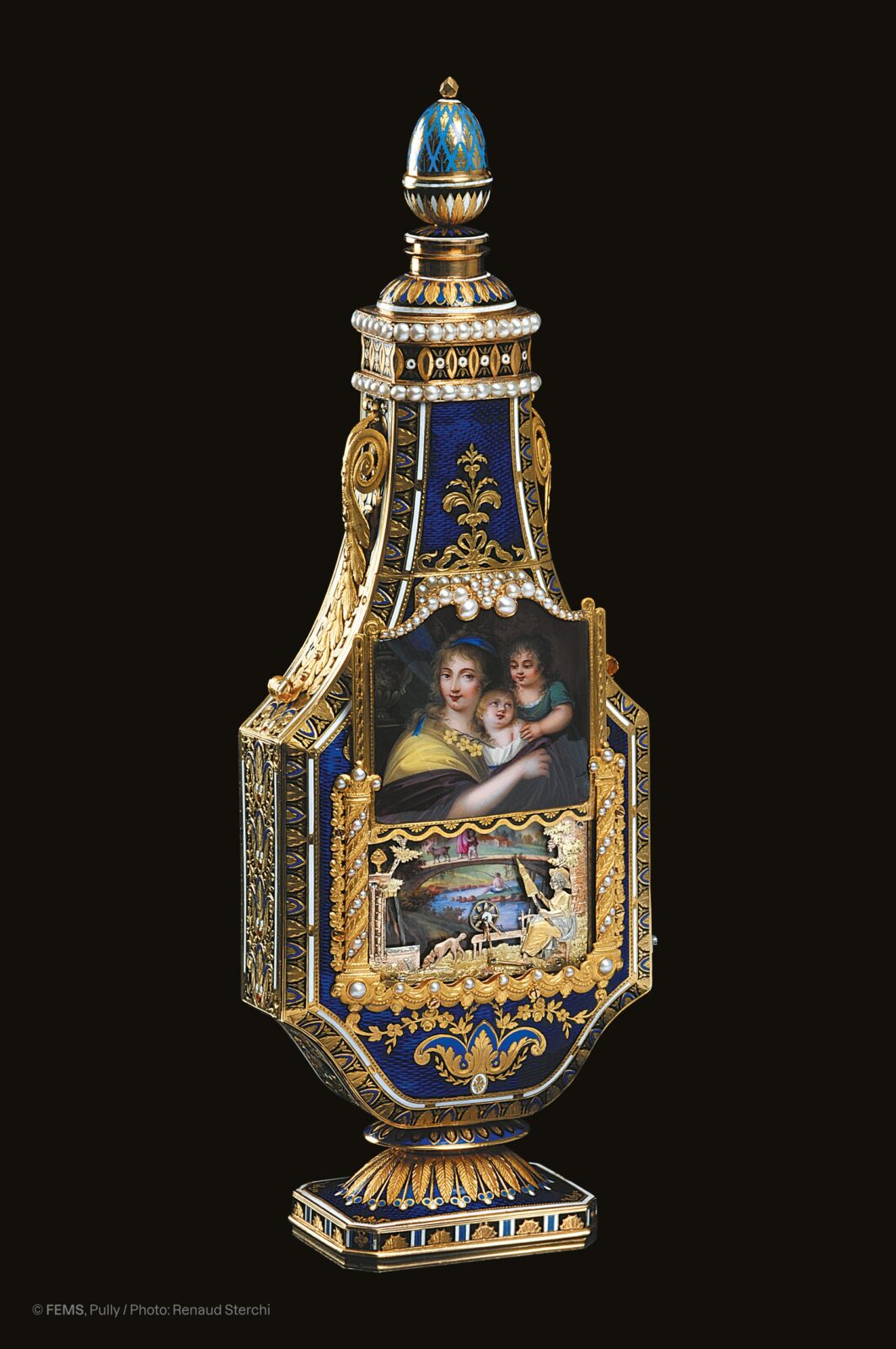
Perfume flask with watch, automata and carillon, early 19th century
© FEMS, Pully – photo Renaud Sterchi
ETHIOPIAN GOLD CATERPILLAR
EARLY 19TH CENTURY
Eleven articulated gold segments conceal a compact mechanism that produces an undulating movement through the body.
Here, mechanical ingenuity is compressed into an extraordinarily small volume, transforming jewellery into movement and giving the object an almost uncanny suggestion of life.
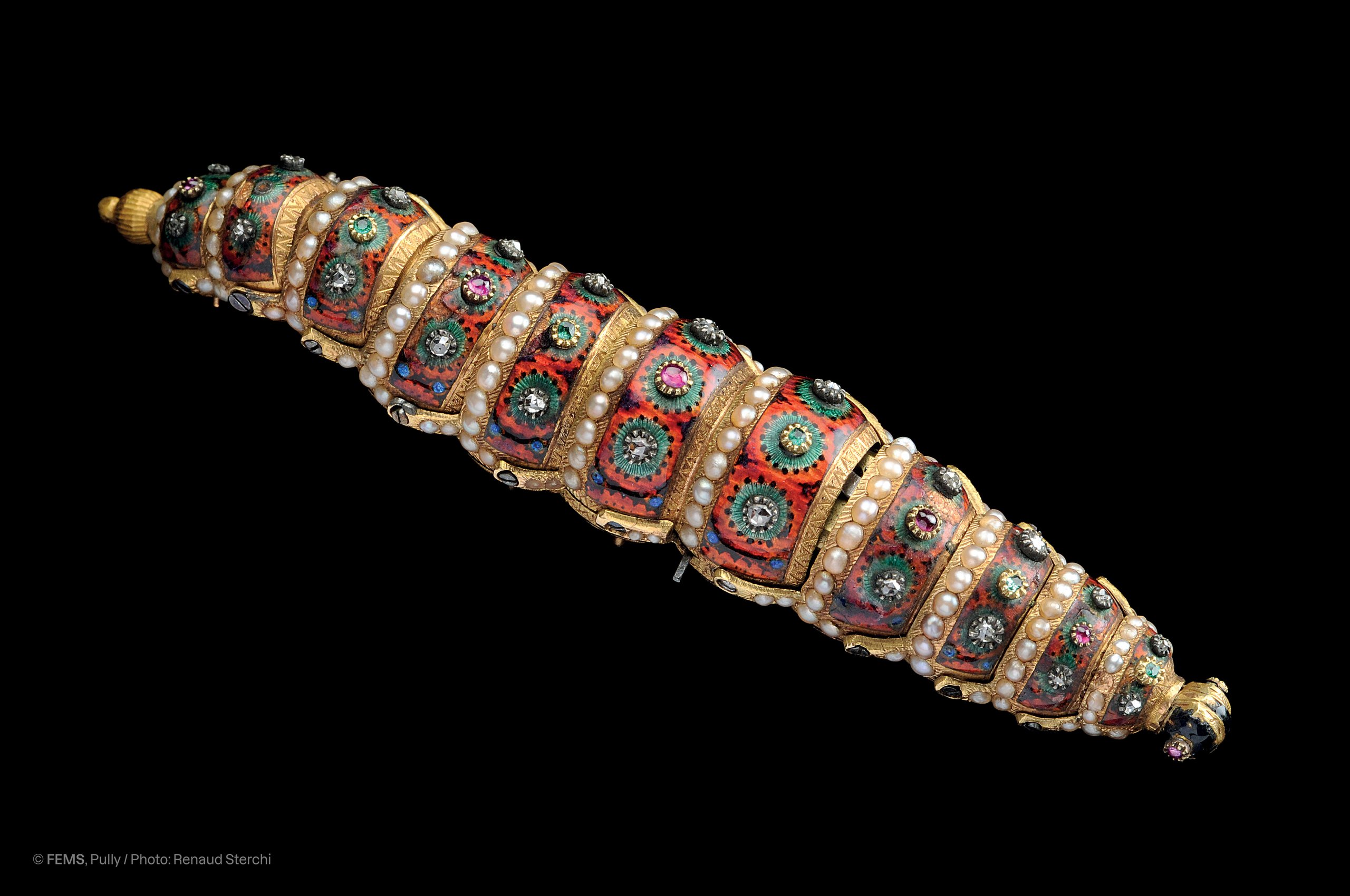
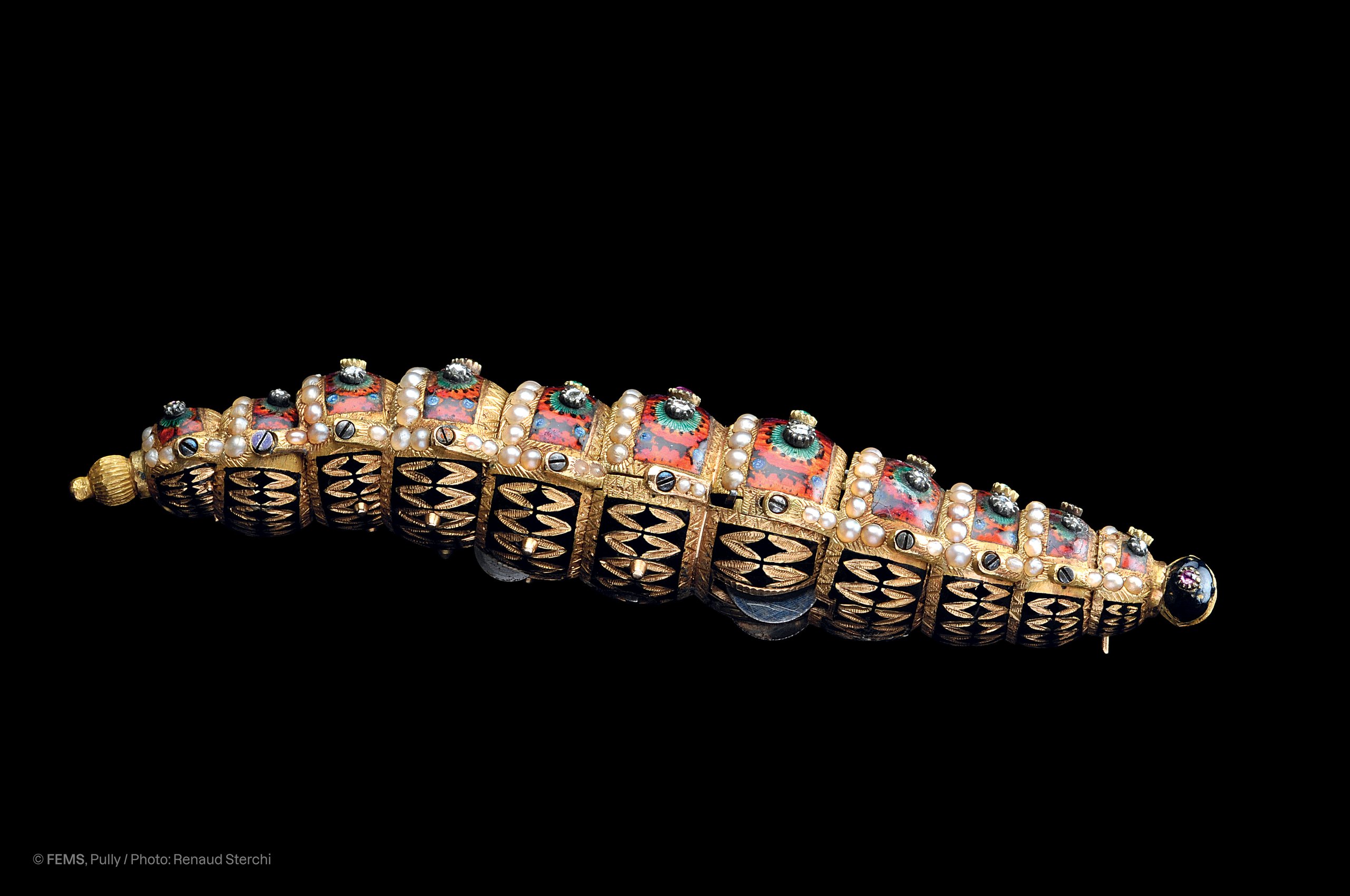
Ethiopian gold caterpillar, early 19th century
© FEMS, Pully – photo Renaud Sterchi
FROM RESTORATION TO CREATION
To place such historical masterpieces beside contemporary Parmigiani Fleurier creations is not to suggest that modern watchmaking should imitate them.
Quite the opposite.
Restoration teaches that transmission comes from understanding principles, not reproducing appearances: architecture, energy, sound, proportion, movement, legibility and the relationship between complexity and experience.
What is understood can be preserved.
What is preserved can be transmitted.
What is transmitted can inspire creation.
Three creations make this continuum particularly visible.
LA ROSE CARRÉE
A HISTORICAL MOVEMENT GIVEN A NEW FUTURE
At the heart of La Rose Carrée lies a grande sonnerie and minute repeater movement made by Louis-Elisée Piguet between 1898 and 1904. Acquired by Michel Parmigiani in the late 1990s, the calibre remained for more than twenty years awaiting restoration and a new life.
For the Maison’s 25th anniversary, it was fully restored while preserving its authenticity, then placed at the centre of a unique contemporary white-gold pocket watch, uniting historical mechanics with engraving and grand feu enamel.
Its significance lies in this attitude towards history: the past is neither copied nor frozen.
It is allowed to live forward.
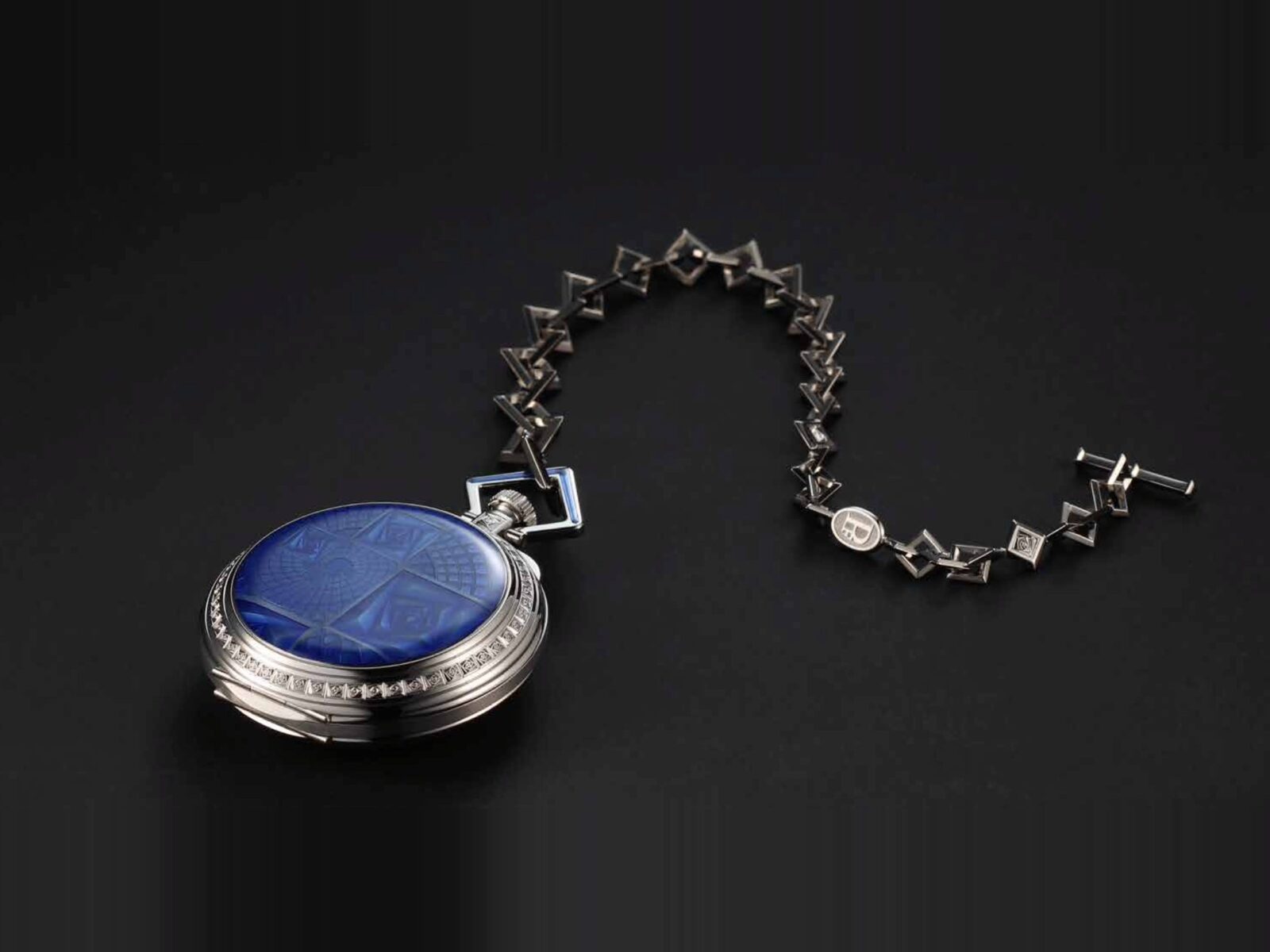
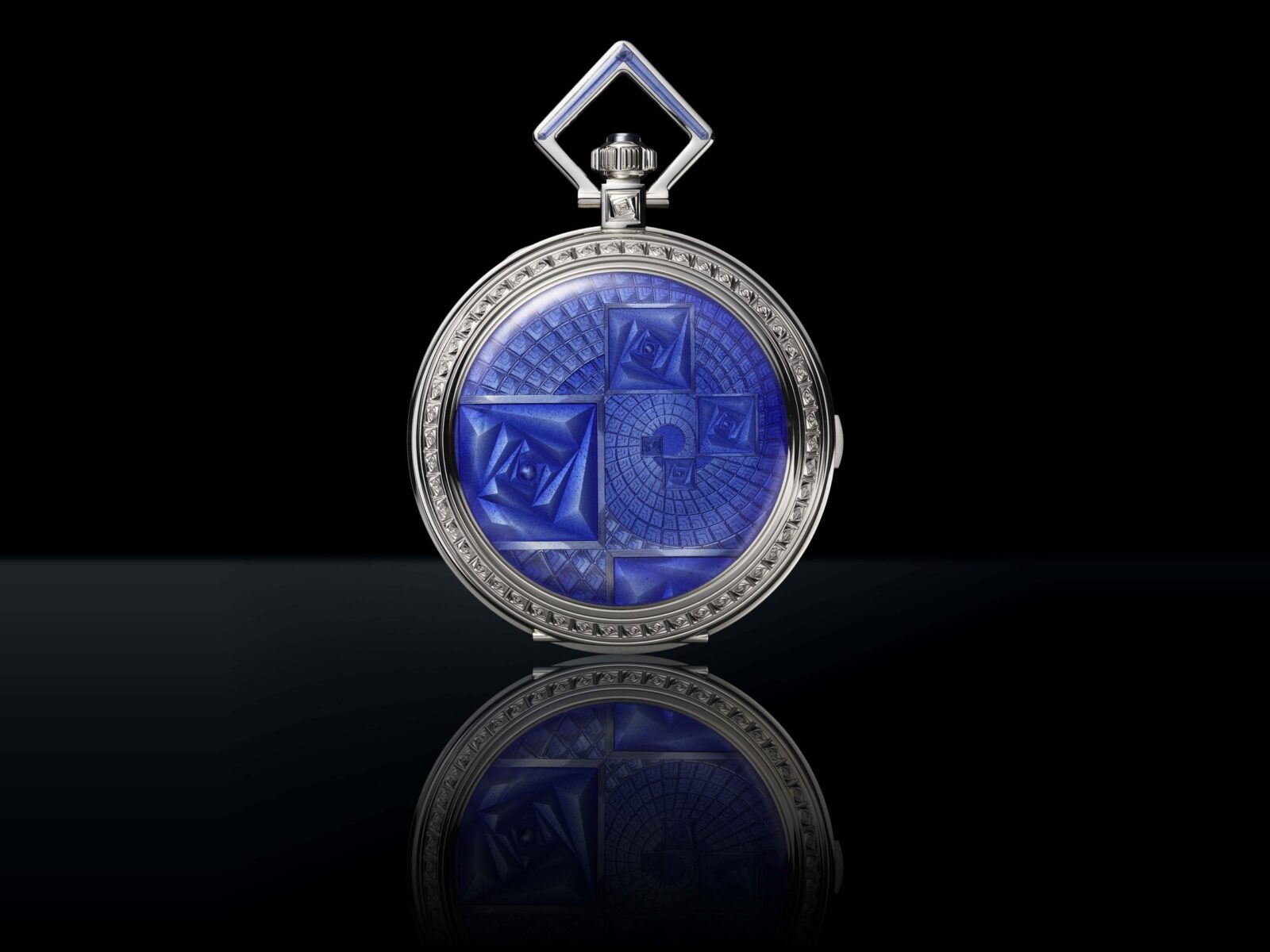
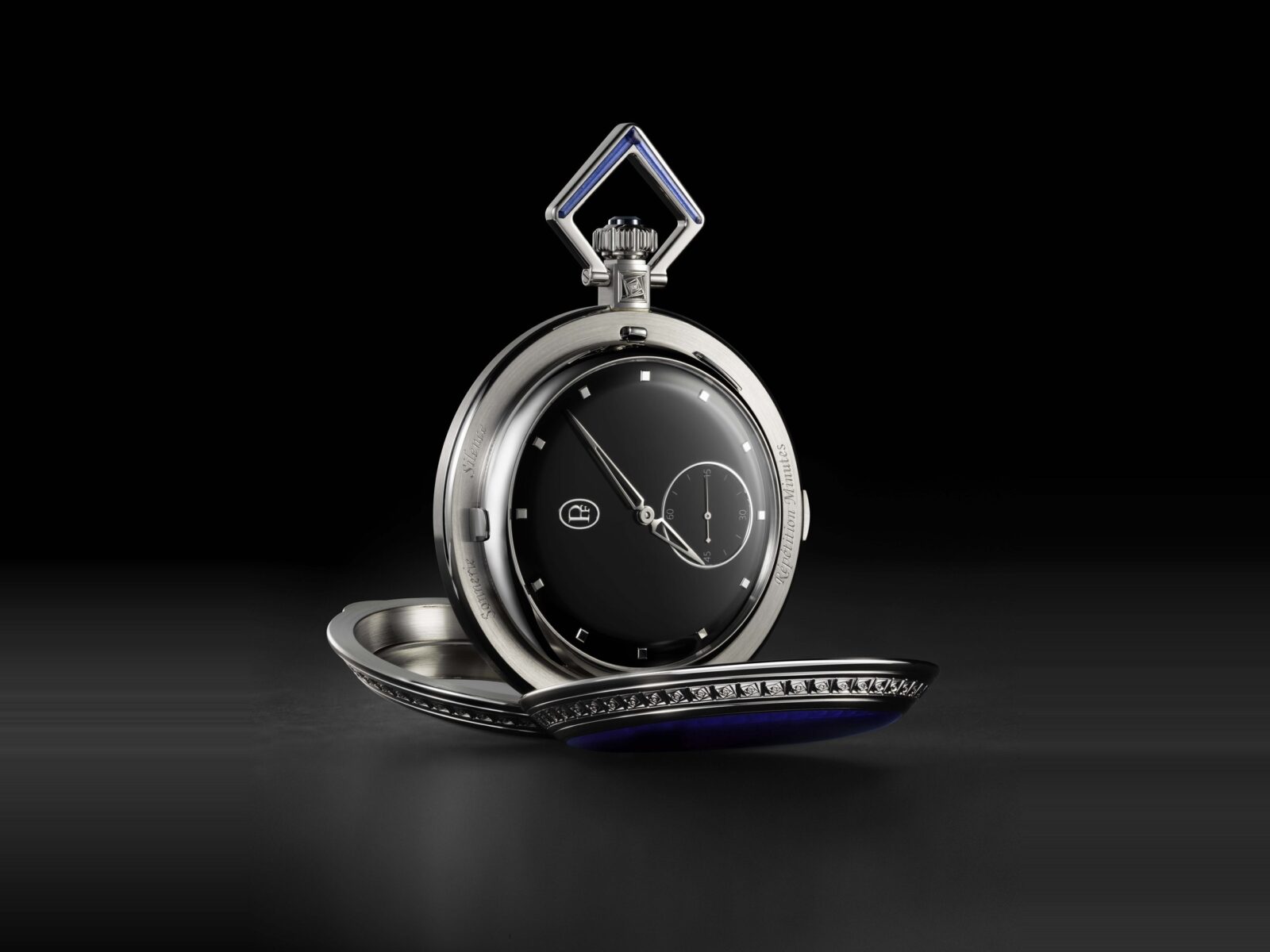
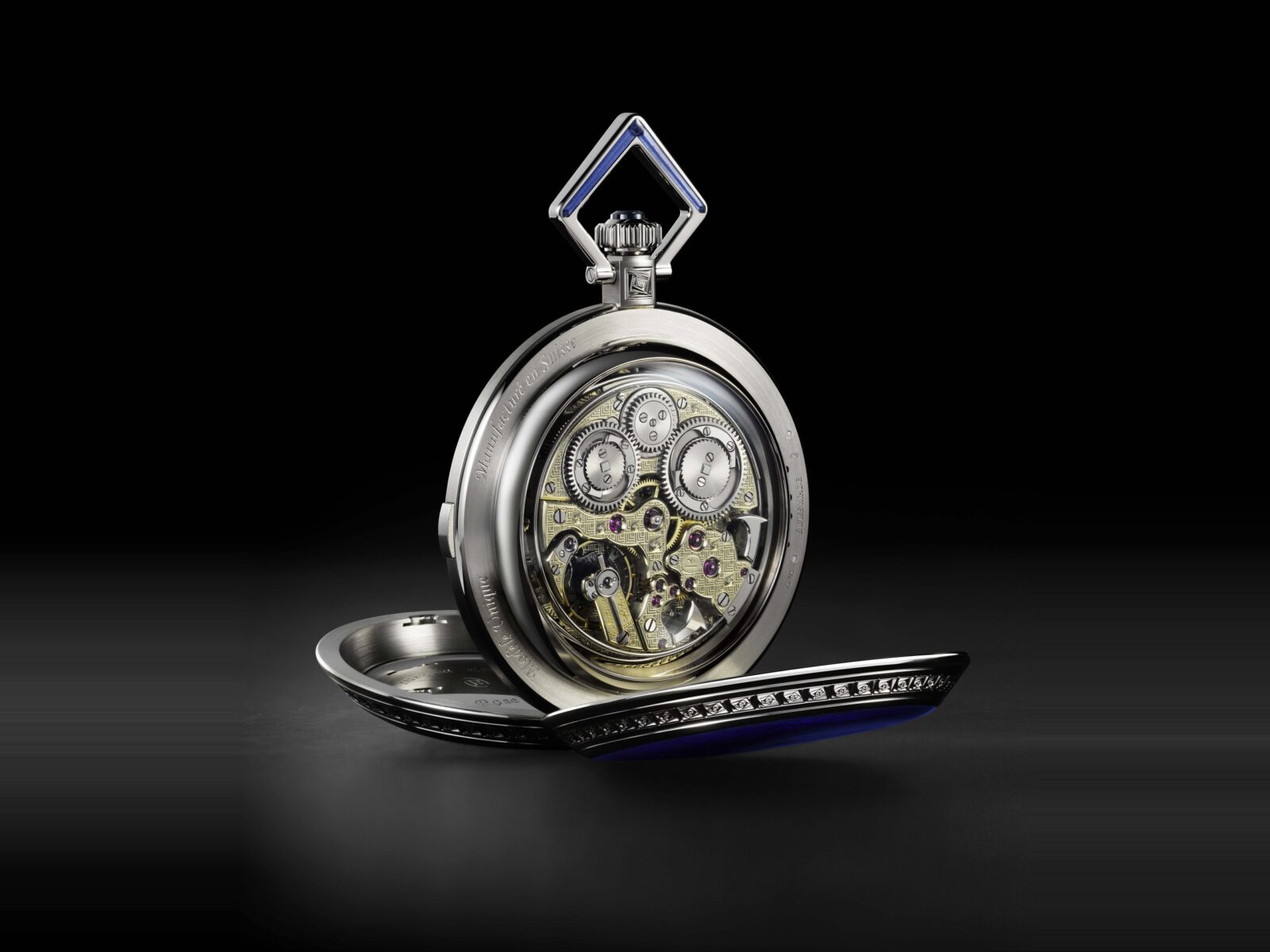
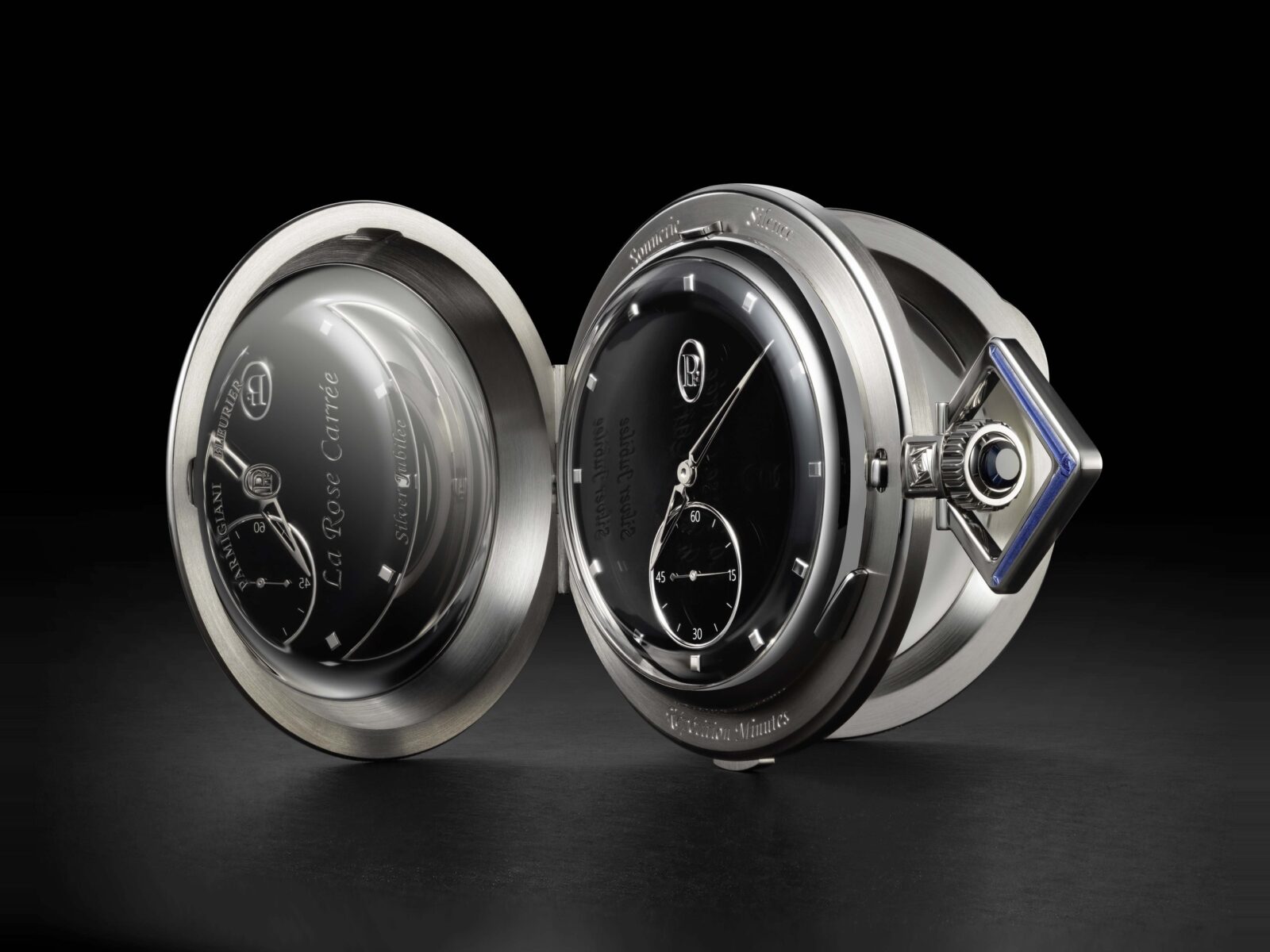
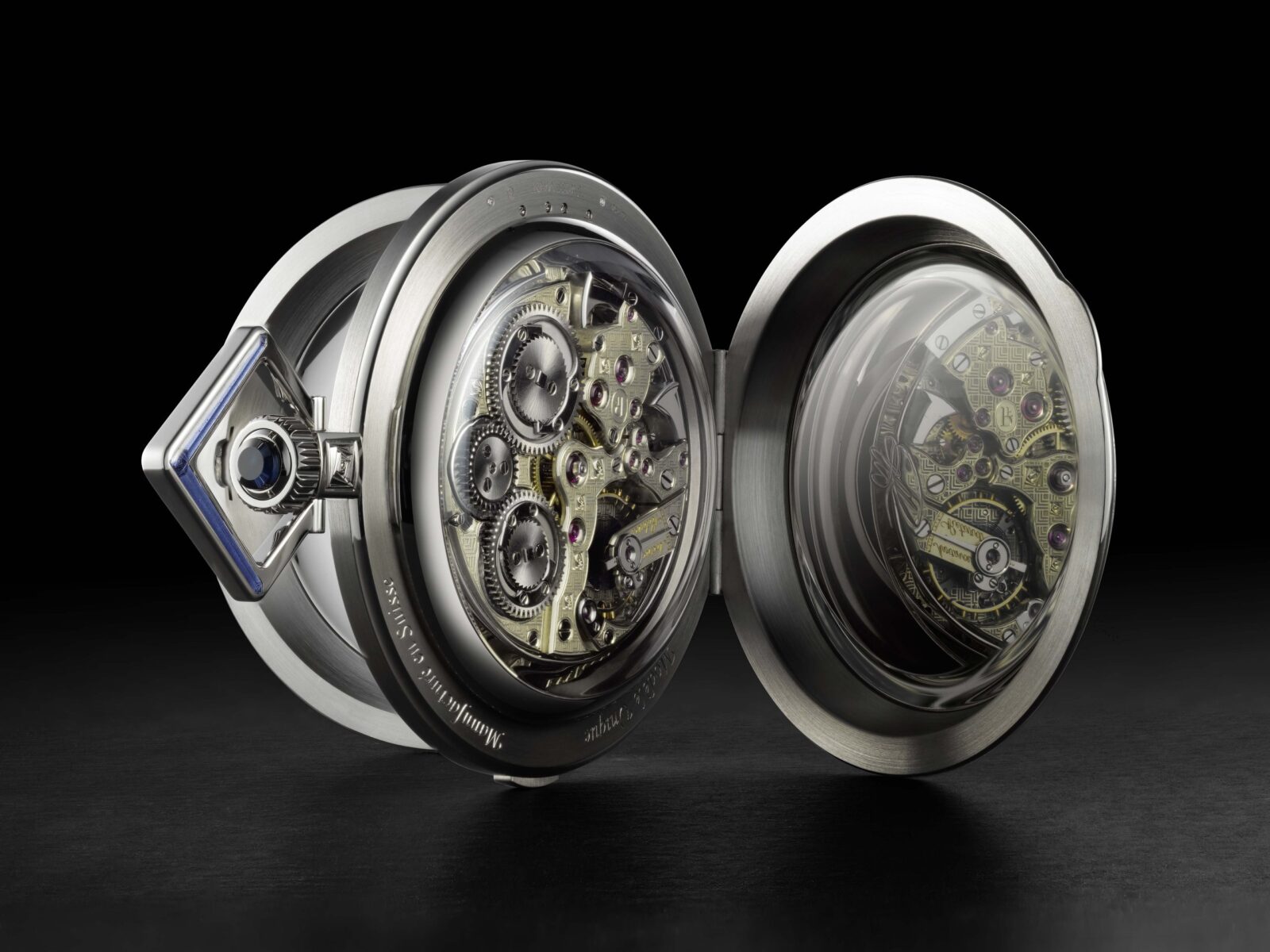
La Rose Carrée (2021)
CARILLON TOURBILLON
WHEN MECHANICAL MEMORY BECOMES ARCHITECTURE
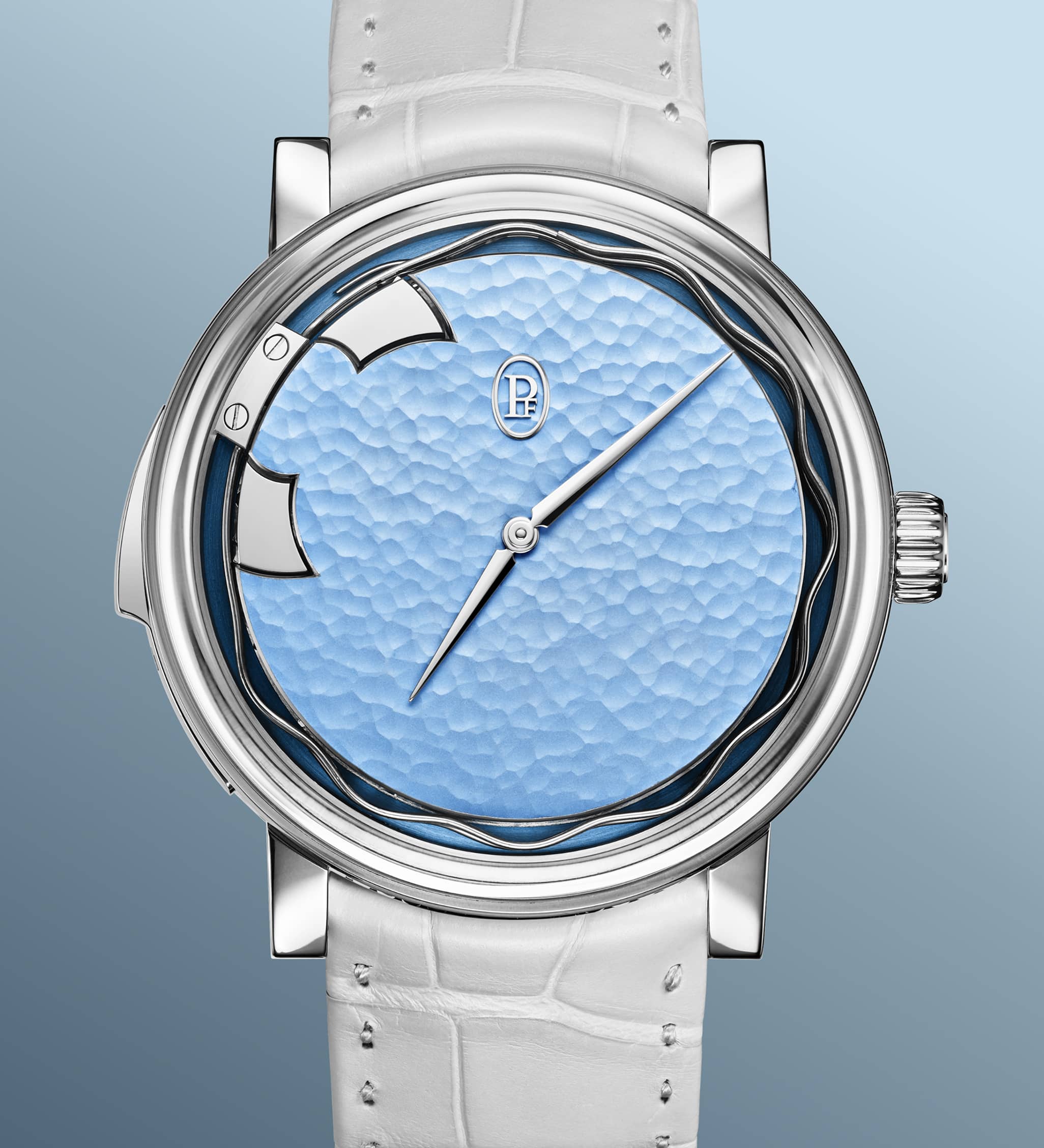
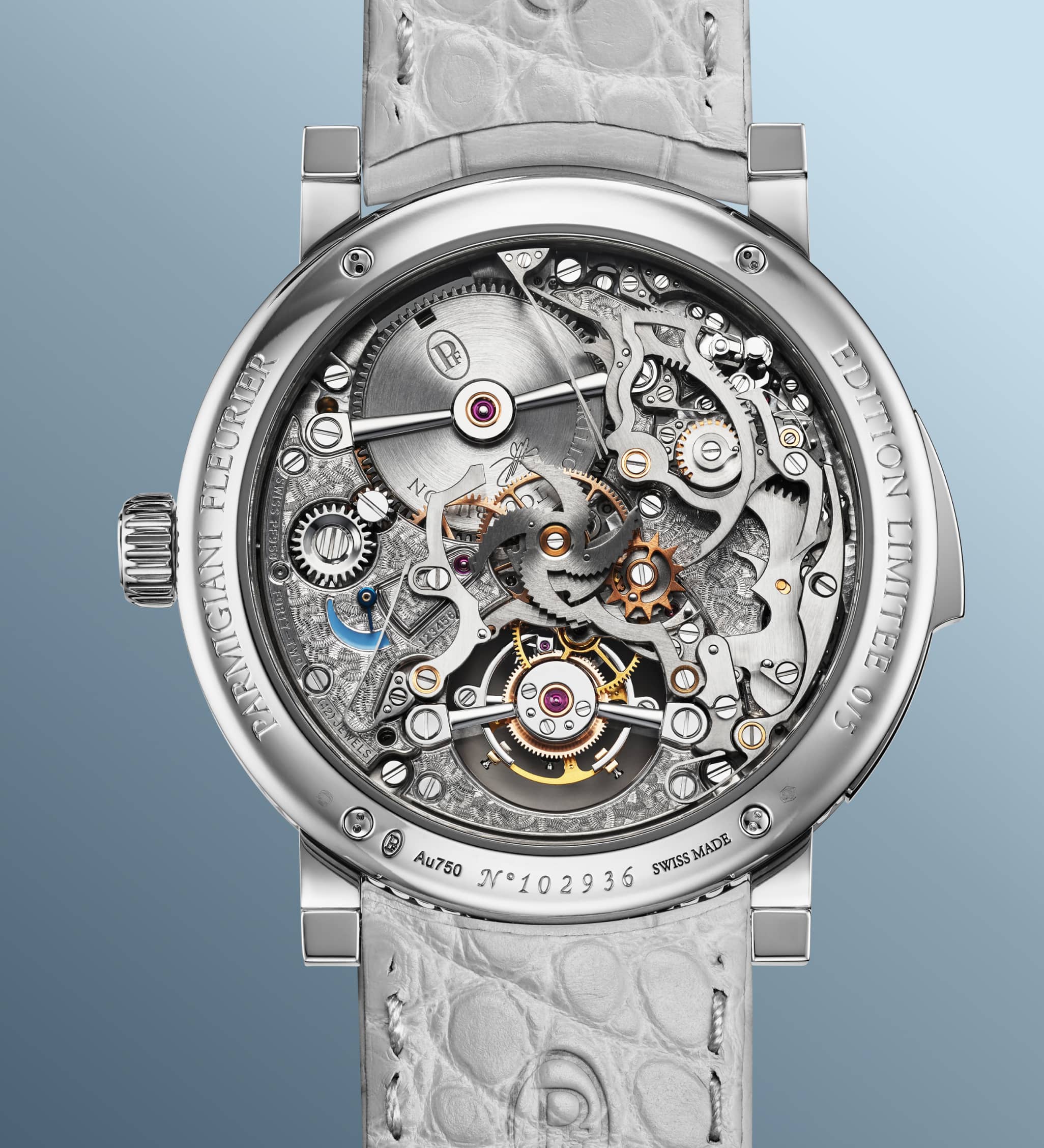
Created for Parmigiani Fleurier’s 30th anniversary and produced in only five examples, the Carillon Tourbillon explores one of Haute Horlogerie’s most demanding territories: sounding time.
Its four serpentine gongs reveal the deeper meaning of the exhibition.
Their form derives directly from an element observed on a Perrin Frères pocket watch restored by Parmigiani Fleurier. Reinterpreted in the Carillon Tourbillon, the serpentine architecture becomes simultaneously acoustic, aesthetic and spatial.
A mechanical idea conceived almost two centuries earlier is not reproduced: it is understood, transformed and incorporated into a new construction.
Memory becomes form.
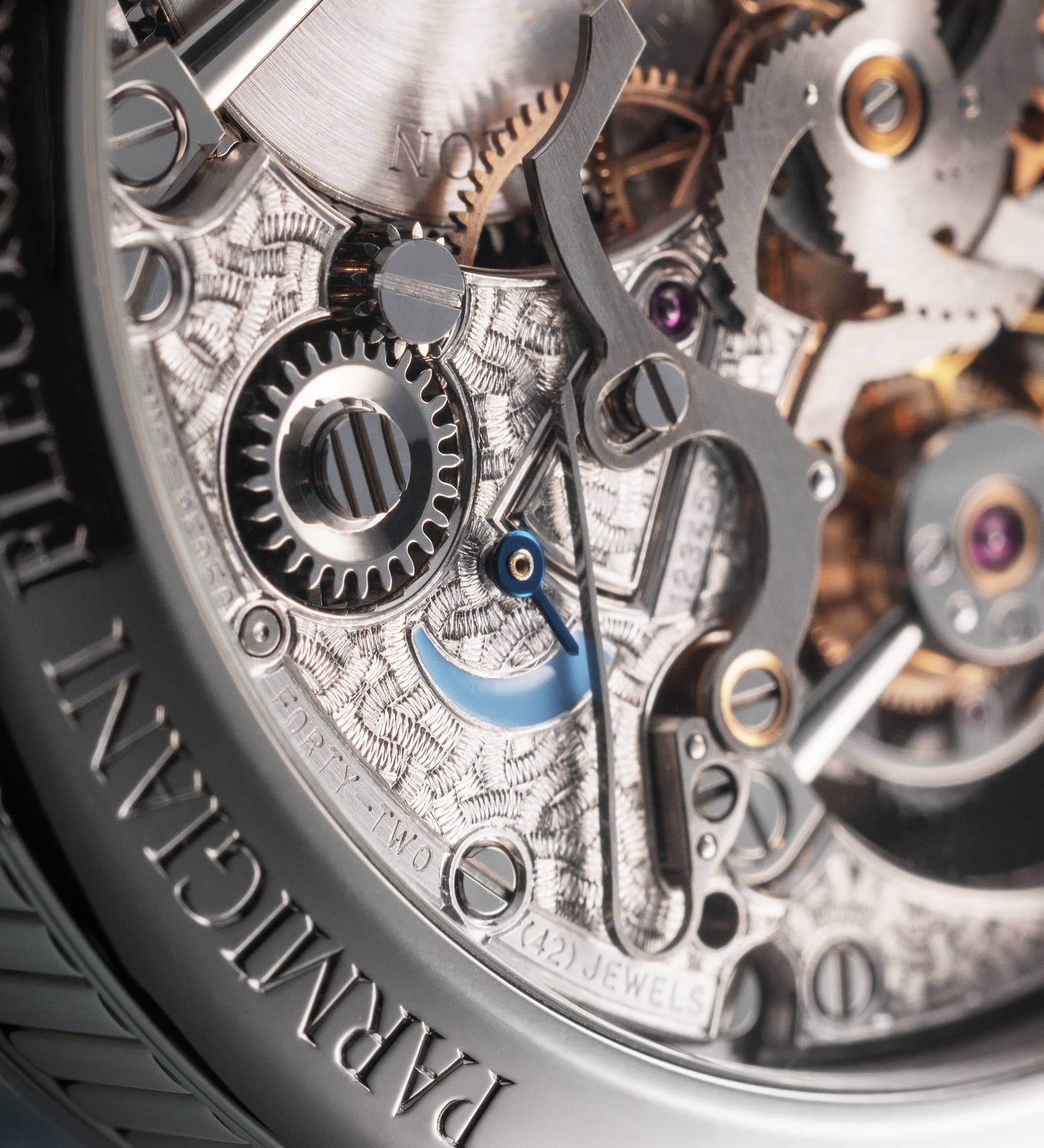
Carillon Tourbillon (2026)
TONDA PF CHRONOGRAPHE MYSTÉRIEUX
WHEN KNOWLEDGE OPENS NEW POSSIBILITIES
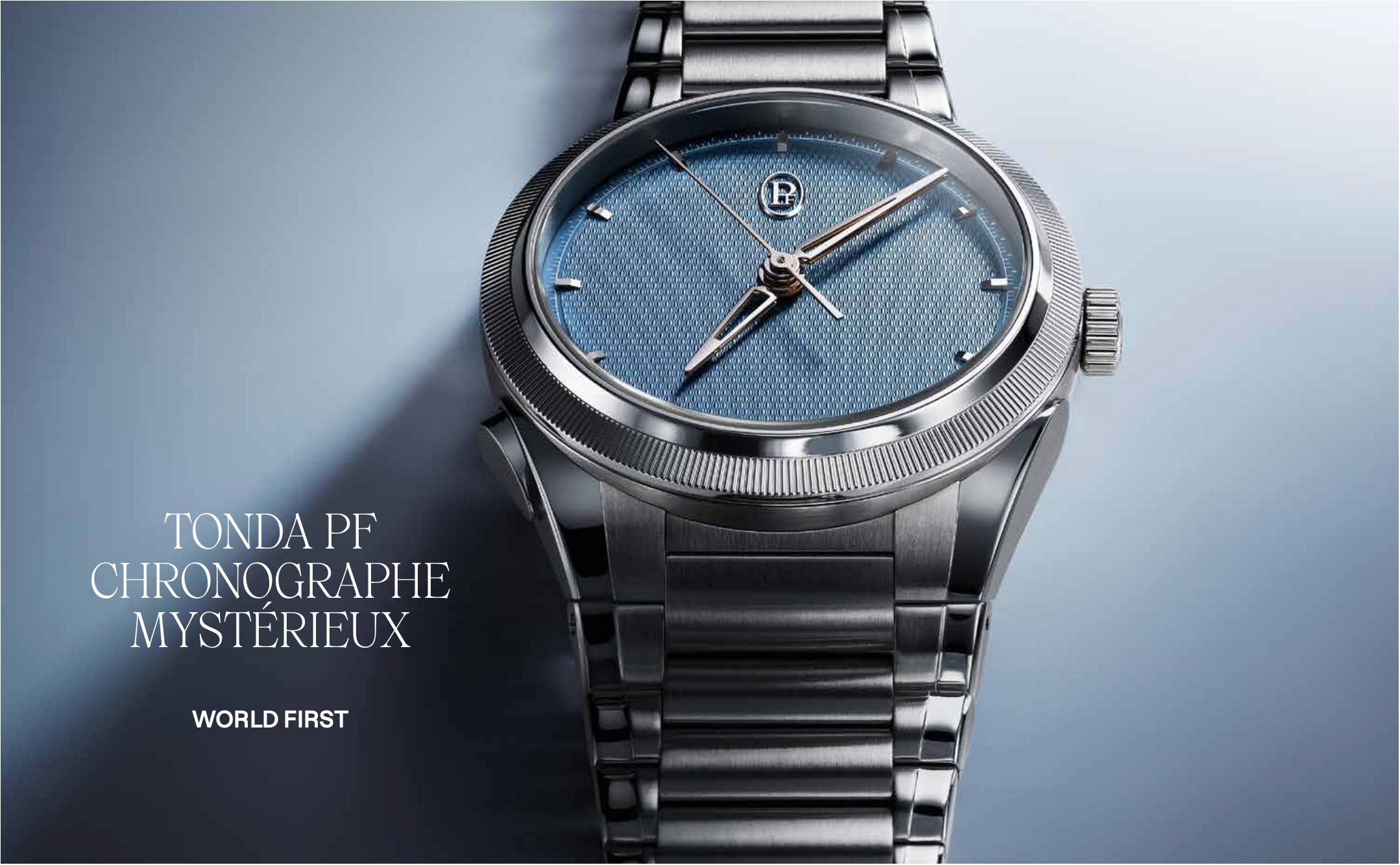
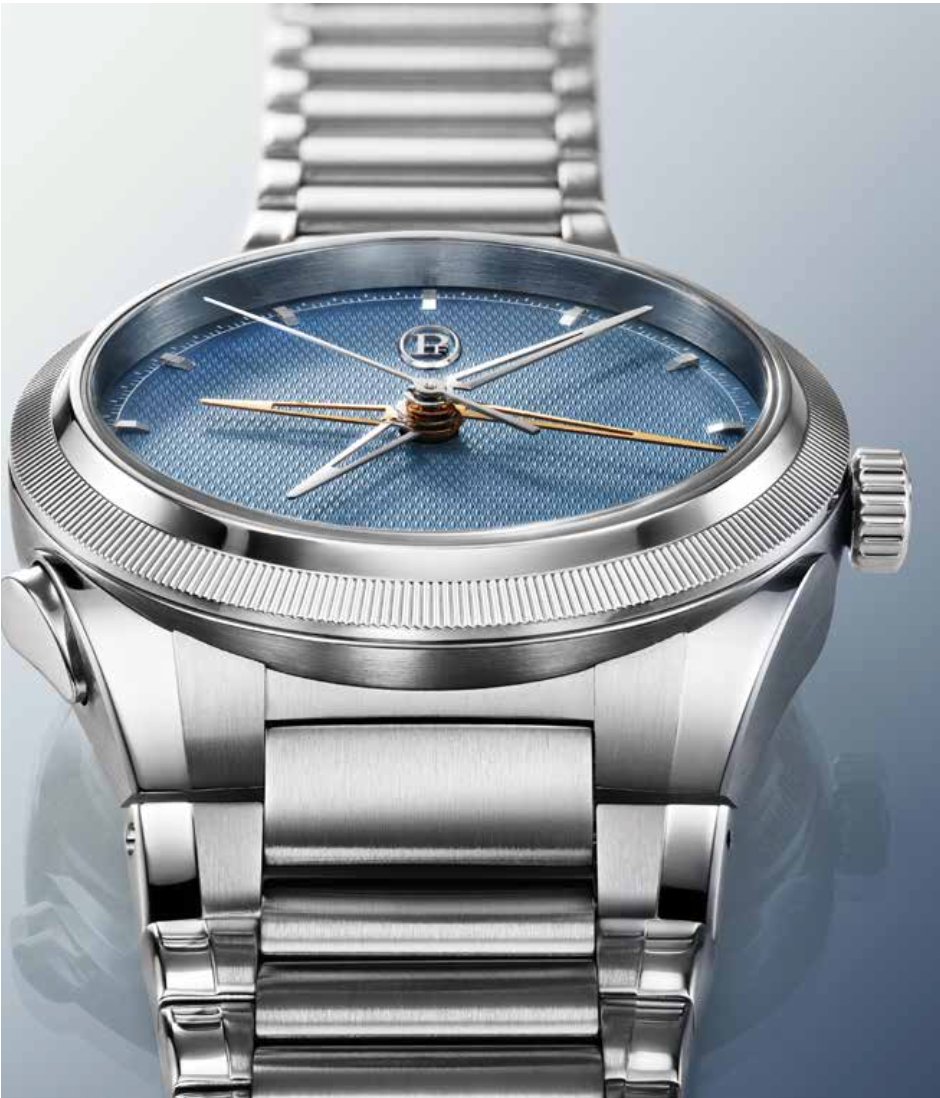
The TONDA PF Chronographe Mystérieux demonstrates the other side of this philosophy: a Maison rooted in restoration need not be conservative.
At rest, it presents the purity of a three-hand TONDA PF. There are no permanent chronograph counters or scales. Activate the function and five coaxial hands reveal a completely different architecture; reset it and the complication disappears once again. Behind this apparent simplicity lies the PF053 calibre and an unprecedented triple-clutch construction.
The achievement is therefore not complexity alone, but its hierarchy.
The mechanism appears only when required. Civil time remains sovereign.
Decades spent dismantling, analysing and rebuilding historical mechanisms produced a culture that has never been conservative, but has opened new fields of possibility.
Knowledge of the past does not constrain invention.
It makes new forms of invention possible.
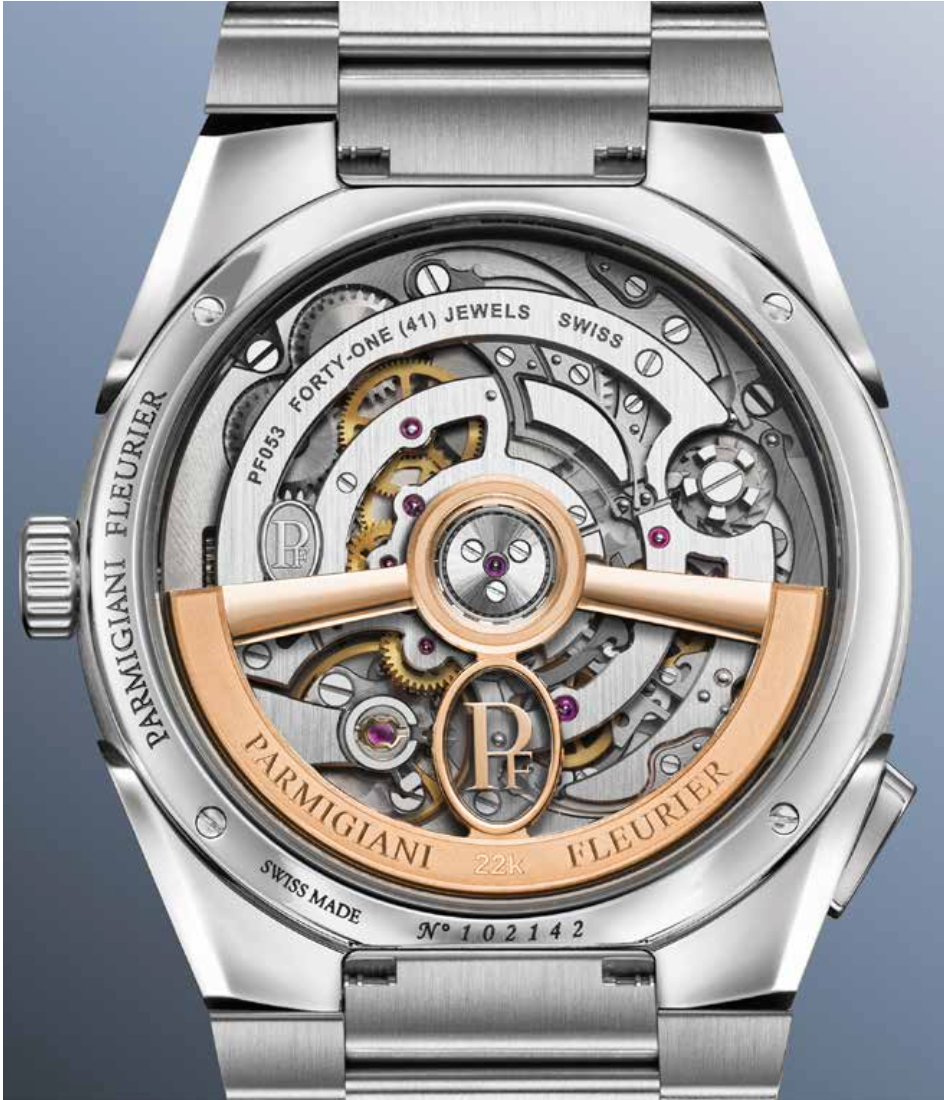
TONDA PF Chronographe Mystérieux
A DIALOGUE ACROSS THREE CENTURIES
This is the true subject of Mechanical Wonders.
Not nostalgia, and not heritage treated as something fixed.
But the continuity of mechanical thought.
Across generations, watchmakers confront enduring questions: how to control energy; how to create sound; how to conceal complexity; how to translate mechanics into emotion; how to make sophisticated architecture serve clarity rather than spectacle.
The answers evolve.
The questions remain.
This is what distinguishes Parmigiani Fleurier’s relationship with its origins. Restoration does not sit behind contemporary creation as a chapter of corporate history.
It runs through it.
WHY TOKYO
Tokyo offers a particularly meaningful setting for this conversation.
Beyond aesthetic correspondences, Parmigiani Fleurier shares with Japanese craft culture a profound respect for mastery, material, gesture and the transmission of knowledge, and an understanding that tradition remains alive only when each generation learns it deeply enough to carry it forward.
That relationship is more compelling than imitation or superficial cultural reference.
It concerns a way of thinking, a way of making. And ultimately, a way of understanding time itself.
Thirty years after its founding, Mechanical Wonders invites collectors to encounter Parmigiani Fleurier from an unusual perspective: begin not with the latest watch, but with the knowledge that made contemporary creation possible.
To perpetuate the mechanical arts is not to preserve them unchanged.
It is to understand them deeply enough to allow them to evolve.